
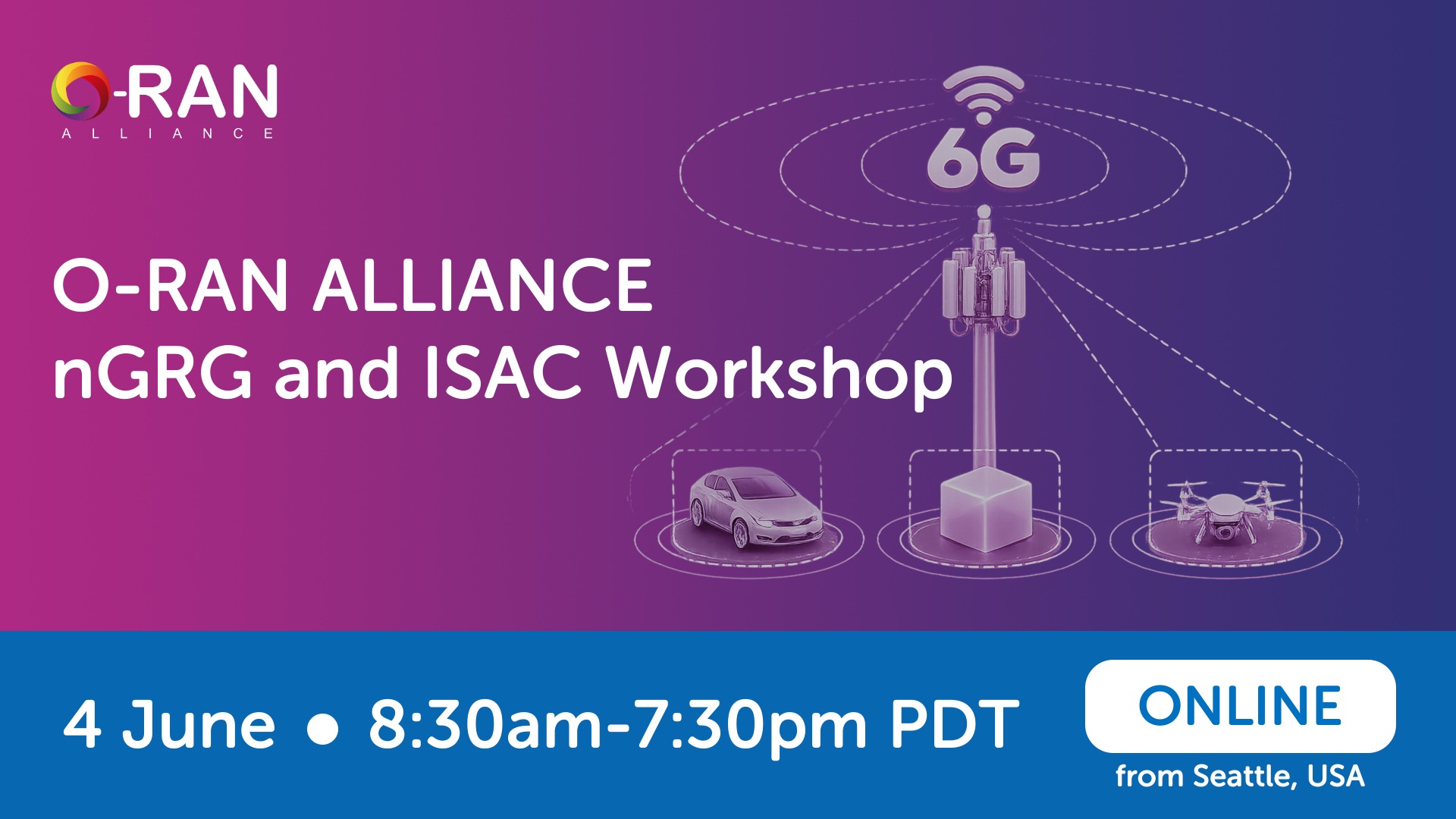
O-RAN ALLIANCE’s Industry Engagement Focus Group (IEFG) and next Generation Research Group (nGRG) are jointly hosting a one‑day workshop on next-G research and on Integrated Sensing & Communications (ISAC).
It's scheduled on June 4, 2026 from 8:30am – 7:30pm PDT as an interactive online event, broadcast from the O-RAN F2F meeting in Seattle, USA.
O-RAN members and participants are welcome to attend in person, as part of the O-RAN F2F meeting Seattle-Bellevue, 1-5 June 2026 - register through the wiki (requires O-RAN membership login).
Organized by O-RAN ALLIANCE's next Generation Research Group (nGRG).
Pacific Daylight Time zone (PDT)
______________
______________
O-RAN has built the open RAN. Agentic AI systems reason over goals, plan across steps, and act autonomously. This talk argues that the O-RAN community should proactively define how agentic intelligence integrates into the RAN architecture, align that work with parallel efforts in the broader standards ecosystem, and establish clear boundaries before fragmented vendor implementations close the cognitive layer that open interfaces were meant to protect.
______________
6G is evolving beyond “enhanced connectivity” toward native integration of communication, computing, and intelligence at the access edge. The radio access network is shifting from conventional wireless access nodes to comm–compute–intelligence convergence anchors that host the radio protocol stack, edge compute, and intelligent closed-loop control. Network services are also moving from human- or application-driven connectivity to Agentic Communication—intent-driven, goal-negotiable, and partially autonomous sessions in which terminal-side and network-side agents use tasks, semantics, and policies as inputs to autonomously perform discovery, negotiation, resource requests, and quality-of-service assurance, upgrading the communication system from a bit pipe to a collaborative agent network. This talk outlines the base-station evolution path from 5G-Advanced to 6G, presents a reference architecture for comm–compute–intelligence converged gNBs, and clarifies core capability boundaries at the base station around hardware/software disaggregation, edge compute pooling and placement, coordinated scheduling of communication and compute resources, and unified orchestration of communication, compute, and intelligence. On the intelligence plane, we propose co-design of lightweight Agentic AI with Agentic Communication. Drawing on industry practice, the session offers reference perspectives for the coordinated evolution of 6G comm–compute–intelligence converged base stations and Agentic Communication.
This talk argues that 6G should be designed as an AI‑native system, where an Edge AI stack and distributed AI inference infrastructure come first, and the RAN is built on top of this foundation rather than augmented by AI after the fact. From this perspective, the 6G rollout becomes the buildout of a global, distributed AI‑inference substrate, leveraging the telco’s massive cellular and edge footprint to host low‑latency, privacy‑preserving AI services. We examine the architectural implications of co‑designing RAN and AI workloads on shared edge infrastructure: programmable edge platforms, distributed AI runtimes, and tight edge–cloud orchestration under real‑time constraints. This reframing reshapes our 6G research priorities and enables new classes of applications—such as physical AI, sensing, robotics, and ultra‑low‑latency inference—positioning 6G as a convergence point of connectivity and distributed intelligence.
______________
This presentation showcases a comprehensive OpenAirInterface (OAI) implementation for 5G O-RAN systems featuring 7.2 fronthaul split with end-to-end emulation capabilities and advanced compression techniques. The presentation demonstrates the baseline OAI 7.2 fronthaul implementation where O-DU and O-RU are connected via 7.2 split architecture, with UE connectivity achieved through vrtsim channel emulator enabling realistic end-to-end testing scenarios that support multi-UE configurations with heterogeneous antenna setups, GPU-accelerated channel convolution, and angle-of-arrival modeling for spatial effects evaluation. Furthermore, this presentation covers the integration of compression techniques within the OAI framework, presenting a full-stack fronthaul simulation approach that enables comprehensive analysis across complete UE-RU-DU deployments, capturing interactions between the wireless stack and fronthaul transport to evaluate the impact of IQ compression on system-level performance metrics including throughput, signal quality, and fronthaul bandwidth usage, with experimental results highlighting tradeoffs between fronthaul efficiency and wireless performance for scalable O-RAN deployments.
______________
Multivendor Cloud RAN faults routinely span RAN software, the cloud platform, and underlying hardware, making Day-2 triage slow and brittle. Agentic systems integrated through an Agentic Gateway over MCP have begun to address the diagnosis half of the problem by coordinating domain-specific agents over controlled interfaces while preserving vendor-private knowledge. PTP synchronization is a particularly demanding test, with root causes ranging from hardware timestamp inconsistency to host-level misconfiguration interfering with PTP traffic.
This talk asks what it takes to extend such diagnostic substrates into closed-loop Day-2 operations. We propose an agent harness pattern that bridges the diagnostic layer to O-Cloud via the O-RAN O2 IMS API and bare-metal lifecycle management, using Red Hat's open-source O-Cloud Manager as the reference O2 IMS implementation. The pattern layers three contributions on top of generic agent frameworks
We walk host-platform PTP scenarios (a fw-lldp-agent misconfiguration and an outdated NIC driver) through the harness, from linuxptp state changes published as O-RAN CloudEvents by Cloud Event Proxy, to fixes routing into the O-Cloud as MachineConfig and KMM Module artifacts delivered via O2 IMS rather than escalating to the SMO. We close with open questions on human-machine teaming for closed-loop remediation (agent governance, digital-twin sandboxing prior to live action, and EvalOps for agentic confidence scoring), alongside the role of MCP relative to O-RAN-native interfaces.
______________
The ISAC workshop, organized by O-RAN ALLIANCE's Industry Engagement Focus Group (IEFG), dives deep into various aspects of Integrated Sensing and Communications (ISAC) – standards, architecture, implementation, role of open interfaces, and path to 6G native sensing. Discussions will span from current state of ISAC implementations, performance, and validating testing to path to commercialization. We will examine how RAN sensing can leverage E3 (Edge‑Enhanced Exposure) interface and dApps to support ISAC use cases such as drone swarm sensing and detection.
O-RAN IEFG is co-chaired by: AT&T - Pavan Gupta, NEC - Marko Babovic, Radisys - Ganesh Shenbagaraman.
Pacific Daylight Time zone (PDT)
______________
______________
______________
______________
______________
______________
______________
______________
This topic will highlight the recent acceleration of Open Source, Open RAN with OCUDU as a platform to rapidly build out AI-RAN capabilities and specifically ISAC as a key NextG capability. We will highlight our work in this area, alongside the OCUDU project and its partners, leveraging Open RAN as a basis for accelerating pre-standardization activities in AI-RAN, 5G, 6G, and ISAC - and highlight key ISAC data collection, prototyping, interfaces, and paths towards standardization and broader adoption that we are focused on alongside this ecosystem, partners, and our efforts in this area.
______________
______________
Integrated Sensing and Communication (ISAC) is becoming a foundational technology for both O‑RAN evolution and future 6G systems. ISAC enables the RAN to perform joint communication and radio‑based sensing, allowing the network to detect, localize, and characterize passive, non‑connected objects. By embedding sensing as a native RAN function, ISAC allows O‑RU, O‑DU, and O‑CU nodes to reuse communication waveforms, reference signals, and spectrum resources for environmental sensing. Depending on the waveform and processing chain, ISAC can estimate object range, angle, Doppler shift, and in some cases infer size or shape through micro‑doppler and scattering signatures. These capabilities rely on radio signals transmitted and received by both network infrastructure and user equipment.
Radisys has integrated ISAC signal processing and control functions into its O‑RAN compliant DU/CU software. The pre‑E3 O‑RAN interface enables coordination between ISAC sensing modules and RAN control logic. The E3 interface—recently introduced within O‑RAN—provides a standardized mechanism for real‑time, AI‑driven RAN control via distributed applications (dApps). Through E3, dApps can interact directly with O‑DU and O‑CU nodes, enabling low‑latency, closed‑loop control for functions such as dynamic spectrum allocation, positioning, and sensing‑assisted mobility or interference management in 5G and future 6G deployments.
The increasing geopolitical and public‑safety focus on detecting UAVs, drones, and other low‑altitude or small‑RCS objects has intensified the need for wide‑area sensing in both urban and rural environments. Deploying dedicated radar or sensing infrastructure for these use cases requires substantial capital and operational expenditure. Leveraging existing 5G—and future 6G—RAN deployments for ISAC provides a cost‑efficient alternative by reusing existing radio infrastructure, fronthaul/backhaul transport, and compute resources. This approach enables large‑scale sensing coverage without the need for standalone radar systems, positioning the mobile network as a unified communications‑and‑sensing platform.
______________
______________
______________

Ahmed ElSawaf is Nokia’s Head of AI Leadership and Technology in Research and Innovation, with over two decades of experience across both operators and vendors, His focus is on building AI Native 6G networks where AI, cloud and network continuum should be realized, while positioning Nokia’s Research and Innovation for AI supercycle , where beyond connectivity services are mandated for 6G era. Before joining Nokia, He served as Global SVP Network and Cloud , and CTO of Rakuten Germany, where he led the design and buildout of the world's first greenfield cloud naïve Open RAN network, He previously served as Network and Cloud Technical Director at stc, where he led the technology strategy, architecture, and delivery of one of the world’s largest telco cloud platforms. He is committed to advancing AI-native 6G technologies, building strategies that bridge research, standardization, product, and business value, creating measurable value for CSPs, and shaping a more connected, intelligent, and open digital future.
______________
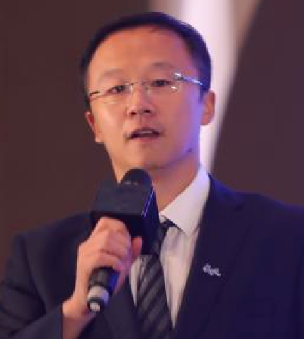
Kang Zheng, Director of the Network Product Center, China Mobile Zijin Institute, is Industry Professor at NJUPT, Off-Campus Graduate Supervisor at Southeast University, Deputy Director of the Mobile Information Network Committee (Jiangsu Society of Engineers). He works on 5G/6G R&D and industrialization, network-product chip technologies.
______________

Dr. Yongguang Zhang is a Partner Principal Researcher at Microsoft Research. In recent years, he has led research and development on AI‑native RAN, Edge AI, and 6G systems, including cloudified and open RAN architectures. He previously led Microsoft’s Open RAN R&D and has played a key role in shaping AI‑RAN and edge intelligence initiatives across research and product teams. He is currently on the Board of Directors of AI-RAN Alliance. He is an IEEE Fellow and a recipient of the USENIX Test of Time Award.
______________
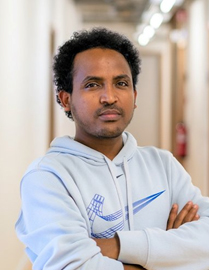
Merkebu Girmay received his Ph.D. in Computer Science Engineering from Ghent University, Belgium, in 2023, specializing in innovative mechanisms to enhance resource optimization across wireless networks. He currently serves as a Software Engineer at the OpenAirInterface (OAI) Foundation, where he contributes to the implementation of 5G NR protocol stack features across PHY and MAC layers, including OFDM modulation/demodulation, channel estimation, MIMO processing, and beamforming algorithms. His recent work focuses on integrating O-RAN 7.2x split fronthaul with the 5G OAI stack and multiple channel emulation approaches. Prior to his current role, he conducted research at IMEC and Ghent University on Software-Defined Radio (SDR) systems, spectrum management, and resource allocation for wireless networks, with extensive experience in C/C++ programming for wireless protocol stacks and practical DSP and RF solutions.
______________

Jesse Chiu received his B.E. in Space Science and Engineering from National Central University, Taiwan, in 2021, and an M.S. in 2024. With a background in signal processing and digital circuit design for satellite communication systems, he is now pursuing a Ph.D. in Electrical and Computer Engineering at the University of Washington in Seattle. His research focuses on advancing satellite-direct-to-device communication, with interests in B5G/6G non-terrestrial network simulations and cross-layer network modeling. He is also involved in O-RAN research, focusing on fronthaul compression and full-stack OpenAirInterface (OAI)-based system evaluation for next-generation wireless networks.
______________

David Kypuros is a Global Principal Solutions Architect at Red Hat. With over 15 years in telecommunications, including pivotal roles at Verizon and AT&T, David now leads initiatives in 5G, edge computing, and AI. A key contributor to the TM Forum Catalyst programs, David has earned accolades for leading award-winning projects in sustainability and generative AI, underscoring a commitment to innovative and responsible technology solutions.
______________
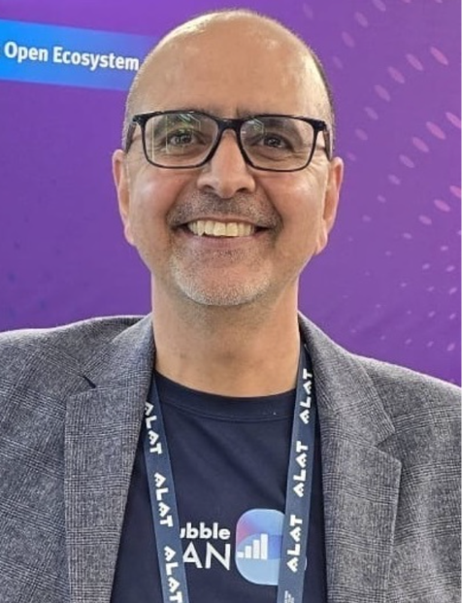
Navid Nikaein is the Founder & CEO of BubbleRAN, Professor in the Communication Systems Department at EURECOM (France), and Co-founder of OpenAirInterface. With a career spanning academia, industry, and open-source collaboration, he focuses on Open and AI RAN architectures, scalable network digital twins, and agentic AI for RAN optimization. His work turns advanced research into next-generation telecom products and solutions.

Brian Daly is an AT&T Fellow, Radio Club of America Fellow, and Assistant Vice President with more than 30 years of experience, driving real‑world deployment of advanced wireless networks. He serves as AT&T’s Executive Committee member of the O‑RAN ALLIANCE and Co‑Chair of the O‑RAN Technical Steering Committee, where he helps guide the evolution of open, software‑driven RAN at global scale. A leader in Integrated Sensing and Communications, 5G, and 6G, Brian works across industry and government to shape standards and architectures that deliver secure, resilient, and deployable networks for the decade ahead.
______________
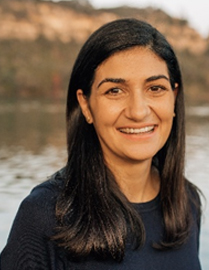
Dr. Salam Akoum is an Expert Member of Technical Staff in advanced RAN technology, Standards, and Spectrum at AT&T. She leads strategic RAN initiatives including ISAC and AI native RAN. Her work encompasses the design, evaluation, and standardization of key 5G and emerging 6G technologies, driving practical system deployments. Dr. Akoum holds over one hundred patents and has extensive contributions to 3GPP and O-RAN.
______________
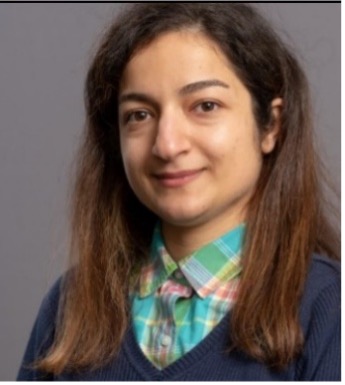
Saeede Enayati received her PhD in Electrical Engineering from the University of Massachusetts (UMass), Amherst in 2023. She is a Principal Wireless Research Engineer at Tiami Networks, where she leads work on Integrated Sensing and Communication (ISAC) including algorithm design, system implementation, and standardization. Her current research focuses mainly on ISAC implementation aspects in 5GNR and 6G as well as ML-based detections in ISAC. Besides, she actively contributes to 3GPP RAN1 on ISAC standardization and participates in the O-RAN and AI-RAN Alliances, where she helps shape the architecture and protocols for network-based sensing.
______________

Christina Chaccour is a Senior Strategy and Product Manager within Ericsson’s Product Line RAN Software, driving the evolution of AI-RAN, 6G, and Integrated Sensing and Communication (ISAC). Within the telco industry, Dr. Chaccour has held roles spanning architecture, business strategy, technical pre-sales, and research.
Her experience includes microchip design, complementing a background that spans industry, academia, and entrepreneurship. She has contributed to both pre-standardization and standardization efforts and engages in policy and industry initiatives, including work with FCC CSRIC IX.
Dr. Chaccour holds a Ph.D. in Electrical Engineering from Virginia Tech and is the author of two books and multiple patents in artificial intelligence and wireless communications. Her work includes widely cited and influential publications in AI for networks, semantic communications, and terahertz systems, alongside editorial roles across leading IEEE journals. She is also co-founder of Internet of Trees.
______________

Steve Papa is CEO of Parallel Wireless pioneer of GreenRAN where we are bringing substantial innovation to Open RAN through live deployments of AI in signal processing, innovation with silicon and RF partners driving energy efficiency gains >50%, and plans to bring sensing to the full 5G NSA/4G stack versus waiting for 6G.
______________

Jan Plachý received BSc, MSc and Ph.D. degree in telecommunication engineering from the Czech Technical University in Prague, Czech Republic in 2012, 2014 and 2021, respectively. Currently, he works as R&D Technical Product Manager at Deutsche Telekom in T-labs, focusing on future networks research, mainly on Integrated Sensing and Communication. Since 2022, he has been participating in research towards 6G in the next Generation Research Group within the O-RAN ALLIANCE and co-leading one of the research streams. Jan is involved in 6G Platform Germany to help shape the German 6G vision. Apart from this, he works as a researcher at the Department of Telecommunication Engineering at the Czech Technical University in Prague. He has been participating in many national and international research projects focused on mobile networks. Currently, Jan leads DT work SENSATION project, with a focus on ISAC. His research interests cover 6G, ISAC and O-RAN. He has published 17 conference and journal papers in IEEE and Elsevier and has co-authored more than 15 patents.
______________

Eng Wei Koo is Keysight’s Director of Standards and Technology, based in Singapore. He represents Keysight in 3GPP RAN plenary and O-RAN ALLIANCE co-chairing the Test and Integration group. Eng Wei has held multiple planning, research, and development leadership positions for RAN development, test and measurements solutions enabling the wireless networks ecosystem to develop, test, deploy and optimize 3G/4G/5G/B5G virtual, Open and AI RAN solutions in the labs and field for the past 20 years. In recent years, he has been working closely with industry partners to co-innovate and design experimental test beds and methodology for AI-RAN.
______________

Dr. Ian C. Wong is currently the Senior Director of RF and Wireless Architecture reporting to the CTO at VIAVI Solutions, where he is leading RF and wireless technology strategy, architectures, and standards. He is the co-chair of the Test and Integration Focus Group (TIFG) in the O-RAN ALLIANCE, and VIAVI’s representative at the full member and steering groups of the NextG Alliance. He is also Chief Architect of the VIAVI Automated Lab-as-a-Service for Open RAN (VALOR) which was awarded $21.7M by the NTIA Public Wireless Supply Chain Innovation Fund’s first Notice of Funding Opportunity.
______________

Dr. Tim O'Shea is the CTO at DeepSig Inc, focused on building and deploying leading AI-RAN & RF-ML solutions, including the world's first AI-Native OpenRAN macro-network with Viettel and industry leading AI Spectrum Sensing solution. He is actively involved in driving AI-RAN in the OCUDU Project, the AI-RAN Alliance TSC, 3GPP 6G and AI-Native Air Interface standardization, and with IEEE's Machine Learning for Communications initiatives. He is an IEEE Fellow and previously worked with FCC TAC, Virginia Tech, Hawkeye 360, Federated Wireless, GNU Radio, Cisco Systems, and the Department of Defense.
______________

Job Benson is the Senior Vice President and General Manager of the Outdoor Connectivity Business Unit at Airspan Networks. In this role, he oversees Airspan's portfolio of solutions spanning Open RAN radio systems, outdoor small cell solutions, and advanced aerial connectivity technologies. He leads Airspan's Integrated Sensing and Communications (ISAC) program to embed AI-native RF sensing into commercial Open RAN radio systems. With more than 25 years in the wireless industry, he has led product development, radio technology strategy, and commercial rollouts at Airspan, Mavenir, Nokia, and Motorola.
______________
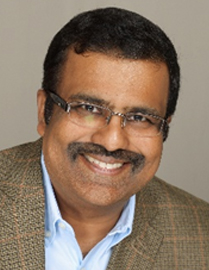
Prakash Siva brings over 20 years of experience in sales, product and engineering development of optical, mobile, IP/Ethernet networks to his role at Radisys. His focus is on enabling Communication Service Providers (CSPs) to adopt and deploy 4G/5G, PON based broadband networks using Open-Source technologies. Prakash’s earlier roles at Radisys included CTO/sales, product manager and lead architect for LTE and wireline networks. Prior to joining Radisys, he held management and engineering positions at HP/Agilent, Turin Networks/Dell and Infinera. Prakash has a diverse background in software/HW engineering that complements his current work to enable rapid deployment of cloud and AI based technologies at CSP scale. Prakash holds an MS in Electrical Engineering from University of Texas (UTA).
______________

Atsushi Nakata is a System Director in the Mobile Access Division at NEC Corporation, responsible for RAN system specification and standardization activities, with a particular focus on the O-RAN ALLIANCE.
He brings more than 23 years of experience in 3GPP RAN system design, including architectures based on the Open Fronthaul interface and the RAN Intelligent Controller (RIC) for the telecom ecosystem.
Based in Japan, Atsushi plays a key role in shaping NEC’s RAN roadmap as part of its social infrastructure business, bridging global standardization activities with R&D innovations and product development to enable secure, open, and sustainable mobile networks.
______________
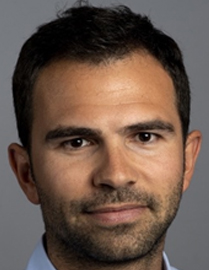
Salvatore D'Oro is a Research Associate Professor at Northeastern University and the CTO of zTouch Network. He received his Ph.D. from University of Catania in 2015. He is an associate editor for IEEE Vehicular Technology Magazine and Elsevier Computer Communications. His research interests include Open RAN, AI-RAN, spectrum sensing, spectrum sharing and AI for wireless networks.
______________

Reiner Stuhlfauth is technology manager- wireless, from the Test & Measurement Division of Rohde & Schwarz, in Munich. Previously, he was a trainer with more than 25 years’ experience in teaching and promoting mobile communication technologies. He is involved in several projects concerning 5G, 5G-Advanced and 6G research. Reiner is a delegate for R&S in the O-RAN ALLIANCE. Current areas of interest include non-terrestrial networks (NTN), O-RAN, Cybersecurity, energy saving and Non-3GPP Interworking. Reiner has presented at a plethora of conferences, webinars and events and published several technical documents. He is one of the authors of the R&S technology book “5G New Radio – fundamentals, procedures, testing aspects”. He holds an academic degree of engineer in telecommunications (Dipl.-Ing) issued by the Technical University of Kaiserslautern.
______________
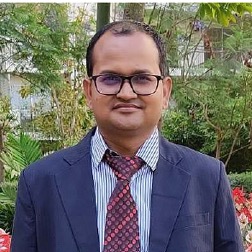
Nishant Tiwari is a Principal Product Line Manager at 1FINITY and an IEEE Senior Member with more than 18 years of global telecom leadership experience. He drives next-generation product portfolio strategy across AI-native Open RAN, 6G, Integrated Sensing and Communications (ISAC), quantum-safe networking, and autonomous network innovation. Nishant has led more than 20 product launches and contributed to business impact exceeding $100M. He works at the intersection of product strategy, standards, architecture, and commercialization, helping translate emerging network technologies into deployable solutions. He actively contributes to and participates in O-RAN ALLIANCE, 3GPP, and IEEE activities, including standards discussions, O-RAN research report reviews, patent initiatives, and industry speaking engagements.
______________
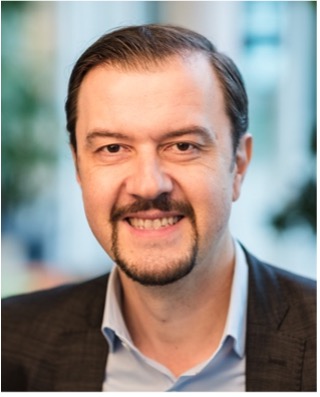
Marko Babovic is a telecom executive and Head of 5G Product Engineering at NEC Europe, bringing more than 27 years of experience in building and scaling global product organizations across the telecom ecosystem.
Based in Sweden, Marko’s role is to complement RAN R&D with global market requirements, operator insights, and customer‑driven perspectives, ensuring alignment between innovation, product strategy, and real‑world deployment needs.
Beyond NEC, Marko plays an active role in shaping the industry. He co‑chairs the O‑RAN ALLIANCE Industry Engagement Focus Group (IEFG) and represents NEC in the AI‑RAN Alliance, supporting collaboration across standards bodies, vendors, and operators.
His previous leadership roles span Ericsson, Mavenir, and Parallel Wireless, covering RAN product management, system engineering, and large‑scale R&D transformation.
______________
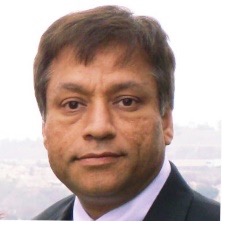
Pavan Gupta is a Principal Technical Program Manager with AT&T leading 5G programs for defense and national security team. Pavan has over 30 years of experience with proven track record of success in wireless R&D, systems engineering, and program management.
Pavan began his career with AT&T where he was responsible for design, development, and systems engineering for baseband signal processing for digital cellular networks. Pavan spent several years on international assignments working with major service provider in engineering and deployment of greenfield wireless networks.
As a Program Director at Samsung, Pavan played a critical role in CDMA and LTE network infrastructure upgrades for a Tier 1 service provider nationwide. Most recently, Pavan led data center and mobility programs for Radisys Corporation globally.
Pavan holds a master’s degree in electrical engineering from Northern Illinois University and is a resident of northern Virginia.
______________

T. Lauriston Hardin, Senior Technology Advisor to NTIA’s $1.5B Public Wireless Supply Chain Innovation Fund, has over 40 years of experience in the telecommunications industry covering a broad range of activities. Mr. Hardin’s present area of expertise includes 6G and AI-Native networks. Previously, he focused on 5G networks (RAN and Core) providing technical expert support in the Sprint-T-Mobile merger litigation, Subject Matter Expert consulting to the US Department of Defense’s 5G to Next G Initiative, NTIA/ITS’s 5G Challenge, RIC Forum, and IORS and the PWSCIF. Mr. Hardin holds a Bachelor of Electrical Engineering from the Georgia Institute of Technology and is a licensed Professional Engineer.
______________
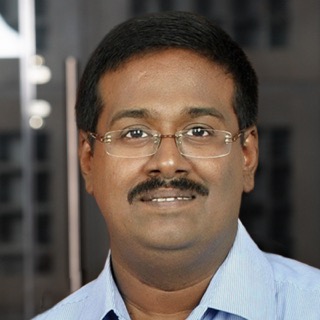
Ganesh Shenbagaraman heads Radisys' integrated solutions across wireless, wireline and media processing domains. Named in 2020 as the recipient of the Small Cell Forum Chair's Award, he leads 4G and 5G wireless product development, drives collaboration with industry partners and performs key leadership roles in 5G standardization and Open RAN ecosystem partnerships at Radisys. He also represents Radisys in industry forums such as the O-RAN ALLIANCE, Small Cell Forum and TIP. Prior to joining Radisys, Ganesh held management and engineering roles at Continuous Computing and Infosys. Ganesh holds an M.E, Control Systems, from the PSG College of Technology and a bachelor's degree in Electrical and Electronics Engineering from the Government College of Engineering, Tirunelveli.
______________
O-RAN ALLIANCE’s Industry Engagement Focus Group (IEFG) and next Generation Research Group (nGRG) are jointly hosting a one‑day workshop on next-G research and on Integrated Sensing & Communications (ISAC).
It's scheduled on June 4, 2026 from 8:30am – 7:30pm PDT as an interactive online event, broadcast from the O-RAN F2F meeting in Seattle, USA.
O-RAN members and participants are welcome to attend in person, as part of the O-RAN F2F meeting Seattle-Bellevue, 1-5 June 2026 - register through the wiki (requires O-RAN membership login).
Organized by O-RAN ALLIANCE's next Generation Research Group (nGRG).
Pacific Daylight Time zone (PDT)
______________
______________
O-RAN has built the open RAN. Agentic AI systems reason over goals, plan across steps, and act autonomously. This talk argues that the O-RAN community should proactively define how agentic intelligence integrates into the RAN architecture, align that work with parallel efforts in the broader standards ecosystem, and establish clear boundaries before fragmented vendor implementations close the cognitive layer that open interfaces were meant to protect.
______________
6G is evolving beyond “enhanced connectivity” toward native integration of communication, computing, and intelligence at the access edge. The radio access network is shifting from conventional wireless access nodes to comm–compute–intelligence convergence anchors that host the radio protocol stack, edge compute, and intelligent closed-loop control. Network services are also moving from human- or application-driven connectivity to Agentic Communication—intent-driven, goal-negotiable, and partially autonomous sessions in which terminal-side and network-side agents use tasks, semantics, and policies as inputs to autonomously perform discovery, negotiation, resource requests, and quality-of-service assurance, upgrading the communication system from a bit pipe to a collaborative agent network. This talk outlines the base-station evolution path from 5G-Advanced to 6G, presents a reference architecture for comm–compute–intelligence converged gNBs, and clarifies core capability boundaries at the base station around hardware/software disaggregation, edge compute pooling and placement, coordinated scheduling of communication and compute resources, and unified orchestration of communication, compute, and intelligence. On the intelligence plane, we propose co-design of lightweight Agentic AI with Agentic Communication. Drawing on industry practice, the session offers reference perspectives for the coordinated evolution of 6G comm–compute–intelligence converged base stations and Agentic Communication.
This talk argues that 6G should be designed as an AI‑native system, where an Edge AI stack and distributed AI inference infrastructure come first, and the RAN is built on top of this foundation rather than augmented by AI after the fact. From this perspective, the 6G rollout becomes the buildout of a global, distributed AI‑inference substrate, leveraging the telco’s massive cellular and edge footprint to host low‑latency, privacy‑preserving AI services. We examine the architectural implications of co‑designing RAN and AI workloads on shared edge infrastructure: programmable edge platforms, distributed AI runtimes, and tight edge–cloud orchestration under real‑time constraints. This reframing reshapes our 6G research priorities and enables new classes of applications—such as physical AI, sensing, robotics, and ultra‑low‑latency inference—positioning 6G as a convergence point of connectivity and distributed intelligence.
______________
This presentation showcases a comprehensive OpenAirInterface (OAI) implementation for 5G O-RAN systems featuring 7.2 fronthaul split with end-to-end emulation capabilities and advanced compression techniques. The presentation demonstrates the baseline OAI 7.2 fronthaul implementation where O-DU and O-RU are connected via 7.2 split architecture, with UE connectivity achieved through vrtsim channel emulator enabling realistic end-to-end testing scenarios that support multi-UE configurations with heterogeneous antenna setups, GPU-accelerated channel convolution, and angle-of-arrival modeling for spatial effects evaluation. Furthermore, this presentation covers the integration of compression techniques within the OAI framework, presenting a full-stack fronthaul simulation approach that enables comprehensive analysis across complete UE-RU-DU deployments, capturing interactions between the wireless stack and fronthaul transport to evaluate the impact of IQ compression on system-level performance metrics including throughput, signal quality, and fronthaul bandwidth usage, with experimental results highlighting tradeoffs between fronthaul efficiency and wireless performance for scalable O-RAN deployments.
______________
Multivendor Cloud RAN faults routinely span RAN software, the cloud platform, and underlying hardware, making Day-2 triage slow and brittle. Agentic systems integrated through an Agentic Gateway over MCP have begun to address the diagnosis half of the problem by coordinating domain-specific agents over controlled interfaces while preserving vendor-private knowledge. PTP synchronization is a particularly demanding test, with root causes ranging from hardware timestamp inconsistency to host-level misconfiguration interfering with PTP traffic.
This talk asks what it takes to extend such diagnostic substrates into closed-loop Day-2 operations. We propose an agent harness pattern that bridges the diagnostic layer to O-Cloud via the O-RAN O2 IMS API and bare-metal lifecycle management, using Red Hat's open-source O-Cloud Manager as the reference O2 IMS implementation. The pattern layers three contributions on top of generic agent frameworks
We walk host-platform PTP scenarios (a fw-lldp-agent misconfiguration and an outdated NIC driver) through the harness, from linuxptp state changes published as O-RAN CloudEvents by Cloud Event Proxy, to fixes routing into the O-Cloud as MachineConfig and KMM Module artifacts delivered via O2 IMS rather than escalating to the SMO. We close with open questions on human-machine teaming for closed-loop remediation (agent governance, digital-twin sandboxing prior to live action, and EvalOps for agentic confidence scoring), alongside the role of MCP relative to O-RAN-native interfaces.
______________
The ISAC workshop, organized by O-RAN ALLIANCE's Industry Engagement Focus Group (IEFG), dives deep into various aspects of Integrated Sensing and Communications (ISAC) – standards, architecture, implementation, role of open interfaces, and path to 6G native sensing. Discussions will span from current state of ISAC implementations, performance, and validating testing to path to commercialization. We will examine how RAN sensing can leverage E3 (Edge‑Enhanced Exposure) interface and dApps to support ISAC use cases such as drone swarm sensing and detection.
O-RAN IEFG is co-chaired by: AT&T - Pavan Gupta, NEC - Marko Babovic, Radisys - Ganesh Shenbagaraman.
Pacific Daylight Time zone (PDT)
______________
______________
______________
______________
______________
______________
______________
______________
This topic will highlight the recent acceleration of Open Source, Open RAN with OCUDU as a platform to rapidly build out AI-RAN capabilities and specifically ISAC as a key NextG capability. We will highlight our work in this area, alongside the OCUDU project and its partners, leveraging Open RAN as a basis for accelerating pre-standardization activities in AI-RAN, 5G, 6G, and ISAC - and highlight key ISAC data collection, prototyping, interfaces, and paths towards standardization and broader adoption that we are focused on alongside this ecosystem, partners, and our efforts in this area.
______________
______________
Integrated Sensing and Communication (ISAC) is becoming a foundational technology for both O‑RAN evolution and future 6G systems. ISAC enables the RAN to perform joint communication and radio‑based sensing, allowing the network to detect, localize, and characterize passive, non‑connected objects. By embedding sensing as a native RAN function, ISAC allows O‑RU, O‑DU, and O‑CU nodes to reuse communication waveforms, reference signals, and spectrum resources for environmental sensing. Depending on the waveform and processing chain, ISAC can estimate object range, angle, Doppler shift, and in some cases infer size or shape through micro‑doppler and scattering signatures. These capabilities rely on radio signals transmitted and received by both network infrastructure and user equipment.
Radisys has integrated ISAC signal processing and control functions into its O‑RAN compliant DU/CU software. The pre‑E3 O‑RAN interface enables coordination between ISAC sensing modules and RAN control logic. The E3 interface—recently introduced within O‑RAN—provides a standardized mechanism for real‑time, AI‑driven RAN control via distributed applications (dApps). Through E3, dApps can interact directly with O‑DU and O‑CU nodes, enabling low‑latency, closed‑loop control for functions such as dynamic spectrum allocation, positioning, and sensing‑assisted mobility or interference management in 5G and future 6G deployments.
The increasing geopolitical and public‑safety focus on detecting UAVs, drones, and other low‑altitude or small‑RCS objects has intensified the need for wide‑area sensing in both urban and rural environments. Deploying dedicated radar or sensing infrastructure for these use cases requires substantial capital and operational expenditure. Leveraging existing 5G—and future 6G—RAN deployments for ISAC provides a cost‑efficient alternative by reusing existing radio infrastructure, fronthaul/backhaul transport, and compute resources. This approach enables large‑scale sensing coverage without the need for standalone radar systems, positioning the mobile network as a unified communications‑and‑sensing platform.
______________
______________
______________
Ahmed ElSawaf is Nokia’s Head of AI Leadership and Technology in Research and Innovation, with over two decades of experience across both operators and vendors, His focus is on building AI Native 6G networks where AI, cloud and network continuum should be realized, while positioning Nokia’s Research and Innovation for AI supercycle , where beyond connectivity services are mandated for 6G era. Before joining Nokia, He served as Global SVP Network and Cloud , and CTO of Rakuten Germany, where he led the design and buildout of the world's first greenfield cloud naïve Open RAN network, He previously served as Network and Cloud Technical Director at stc, where he led the technology strategy, architecture, and delivery of one of the world’s largest telco cloud platforms. He is committed to advancing AI-native 6G technologies, building strategies that bridge research, standardization, product, and business value, creating measurable value for CSPs, and shaping a more connected, intelligent, and open digital future.
______________
Kang Zheng, Director of the Network Product Center, China Mobile Zijin Institute, is Industry Professor at NJUPT, Off-Campus Graduate Supervisor at Southeast University, Deputy Director of the Mobile Information Network Committee (Jiangsu Society of Engineers). He works on 5G/6G R&D and industrialization, network-product chip technologies.
______________
Dr. Yongguang Zhang is a Partner Principal Researcher at Microsoft Research. In recent years, he has led research and development on AI‑native RAN, Edge AI, and 6G systems, including cloudified and open RAN architectures. He previously led Microsoft’s Open RAN R&D and has played a key role in shaping AI‑RAN and edge intelligence initiatives across research and product teams. He is currently on the Board of Directors of AI-RAN Alliance. He is an IEEE Fellow and a recipient of the USENIX Test of Time Award.
______________
Merkebu Girmay received his Ph.D. in Computer Science Engineering from Ghent University, Belgium, in 2023, specializing in innovative mechanisms to enhance resource optimization across wireless networks. He currently serves as a Software Engineer at the OpenAirInterface (OAI) Foundation, where he contributes to the implementation of 5G NR protocol stack features across PHY and MAC layers, including OFDM modulation/demodulation, channel estimation, MIMO processing, and beamforming algorithms. His recent work focuses on integrating O-RAN 7.2x split fronthaul with the 5G OAI stack and multiple channel emulation approaches. Prior to his current role, he conducted research at IMEC and Ghent University on Software-Defined Radio (SDR) systems, spectrum management, and resource allocation for wireless networks, with extensive experience in C/C++ programming for wireless protocol stacks and practical DSP and RF solutions.
______________
Jesse Chiu received his B.E. in Space Science and Engineering from National Central University, Taiwan, in 2021, and an M.S. in 2024. With a background in signal processing and digital circuit design for satellite communication systems, he is now pursuing a Ph.D. in Electrical and Computer Engineering at the University of Washington in Seattle. His research focuses on advancing satellite-direct-to-device communication, with interests in B5G/6G non-terrestrial network simulations and cross-layer network modeling. He is also involved in O-RAN research, focusing on fronthaul compression and full-stack OpenAirInterface (OAI)-based system evaluation for next-generation wireless networks.
______________
David Kypuros is a Global Principal Solutions Architect at Red Hat. With over 15 years in telecommunications, including pivotal roles at Verizon and AT&T, David now leads initiatives in 5G, edge computing, and AI. A key contributor to the TM Forum Catalyst programs, David has earned accolades for leading award-winning projects in sustainability and generative AI, underscoring a commitment to innovative and responsible technology solutions.
______________
Navid Nikaein is the Founder & CEO of BubbleRAN, Professor in the Communication Systems Department at EURECOM (France), and Co-founder of OpenAirInterface. With a career spanning academia, industry, and open-source collaboration, he focuses on Open and AI RAN architectures, scalable network digital twins, and agentic AI for RAN optimization. His work turns advanced research into next-generation telecom products and solutions.
Brian Daly is an AT&T Fellow, Radio Club of America Fellow, and Assistant Vice President with more than 30 years of experience, driving real‑world deployment of advanced wireless networks. He serves as AT&T’s Executive Committee member of the O‑RAN ALLIANCE and Co‑Chair of the O‑RAN Technical Steering Committee, where he helps guide the evolution of open, software‑driven RAN at global scale. A leader in Integrated Sensing and Communications, 5G, and 6G, Brian works across industry and government to shape standards and architectures that deliver secure, resilient, and deployable networks for the decade ahead.
______________
Dr. Salam Akoum is an Expert Member of Technical Staff in advanced RAN technology, Standards, and Spectrum at AT&T. She leads strategic RAN initiatives including ISAC and AI native RAN. Her work encompasses the design, evaluation, and standardization of key 5G and emerging 6G technologies, driving practical system deployments. Dr. Akoum holds over one hundred patents and has extensive contributions to 3GPP and O-RAN.
______________
Saeede Enayati received her PhD in Electrical Engineering from the University of Massachusetts (UMass), Amherst in 2023. She is a Principal Wireless Research Engineer at Tiami Networks, where she leads work on Integrated Sensing and Communication (ISAC) including algorithm design, system implementation, and standardization. Her current research focuses mainly on ISAC implementation aspects in 5GNR and 6G as well as ML-based detections in ISAC. Besides, she actively contributes to 3GPP RAN1 on ISAC standardization and participates in the O-RAN and AI-RAN Alliances, where she helps shape the architecture and protocols for network-based sensing.
______________
Christina Chaccour is a Senior Strategy and Product Manager within Ericsson’s Product Line RAN Software, driving the evolution of AI-RAN, 6G, and Integrated Sensing and Communication (ISAC). Within the telco industry, Dr. Chaccour has held roles spanning architecture, business strategy, technical pre-sales, and research.
Her experience includes microchip design, complementing a background that spans industry, academia, and entrepreneurship. She has contributed to both pre-standardization and standardization efforts and engages in policy and industry initiatives, including work with FCC CSRIC IX.
Dr. Chaccour holds a Ph.D. in Electrical Engineering from Virginia Tech and is the author of two books and multiple patents in artificial intelligence and wireless communications. Her work includes widely cited and influential publications in AI for networks, semantic communications, and terahertz systems, alongside editorial roles across leading IEEE journals. She is also co-founder of Internet of Trees.
______________
Steve Papa is CEO of Parallel Wireless pioneer of GreenRAN where we are bringing substantial innovation to Open RAN through live deployments of AI in signal processing, innovation with silicon and RF partners driving energy efficiency gains >50%, and plans to bring sensing to the full 5G NSA/4G stack versus waiting for 6G.
______________
Jan Plachý received BSc, MSc and Ph.D. degree in telecommunication engineering from the Czech Technical University in Prague, Czech Republic in 2012, 2014 and 2021, respectively. Currently, he works as R&D Technical Product Manager at Deutsche Telekom in T-labs, focusing on future networks research, mainly on Integrated Sensing and Communication. Since 2022, he has been participating in research towards 6G in the next Generation Research Group within the O-RAN ALLIANCE and co-leading one of the research streams. Jan is involved in 6G Platform Germany to help shape the German 6G vision. Apart from this, he works as a researcher at the Department of Telecommunication Engineering at the Czech Technical University in Prague. He has been participating in many national and international research projects focused on mobile networks. Currently, Jan leads DT work SENSATION project, with a focus on ISAC. His research interests cover 6G, ISAC and O-RAN. He has published 17 conference and journal papers in IEEE and Elsevier and has co-authored more than 15 patents.
______________
Eng Wei Koo is Keysight’s Director of Standards and Technology, based in Singapore. He represents Keysight in 3GPP RAN plenary and O-RAN ALLIANCE co-chairing the Test and Integration group. Eng Wei has held multiple planning, research, and development leadership positions for RAN development, test and measurements solutions enabling the wireless networks ecosystem to develop, test, deploy and optimize 3G/4G/5G/B5G virtual, Open and AI RAN solutions in the labs and field for the past 20 years. In recent years, he has been working closely with industry partners to co-innovate and design experimental test beds and methodology for AI-RAN.
______________
Dr. Ian C. Wong is currently the Senior Director of RF and Wireless Architecture reporting to the CTO at VIAVI Solutions, where he is leading RF and wireless technology strategy, architectures, and standards. He is the co-chair of the Test and Integration Focus Group (TIFG) in the O-RAN ALLIANCE, and VIAVI’s representative at the full member and steering groups of the NextG Alliance. He is also Chief Architect of the VIAVI Automated Lab-as-a-Service for Open RAN (VALOR) which was awarded $21.7M by the NTIA Public Wireless Supply Chain Innovation Fund’s first Notice of Funding Opportunity.
______________
Dr. Tim O'Shea is the CTO at DeepSig Inc, focused on building and deploying leading AI-RAN & RF-ML solutions, including the world's first AI-Native OpenRAN macro-network with Viettel and industry leading AI Spectrum Sensing solution. He is actively involved in driving AI-RAN in the OCUDU Project, the AI-RAN Alliance TSC, 3GPP 6G and AI-Native Air Interface standardization, and with IEEE's Machine Learning for Communications initiatives. He is an IEEE Fellow and previously worked with FCC TAC, Virginia Tech, Hawkeye 360, Federated Wireless, GNU Radio, Cisco Systems, and the Department of Defense.
______________
Job Benson is the Senior Vice President and General Manager of the Outdoor Connectivity Business Unit at Airspan Networks. In this role, he oversees Airspan's portfolio of solutions spanning Open RAN radio systems, outdoor small cell solutions, and advanced aerial connectivity technologies. He leads Airspan's Integrated Sensing and Communications (ISAC) program to embed AI-native RF sensing into commercial Open RAN radio systems. With more than 25 years in the wireless industry, he has led product development, radio technology strategy, and commercial rollouts at Airspan, Mavenir, Nokia, and Motorola.
______________
Prakash Siva brings over 20 years of experience in sales, product and engineering development of optical, mobile, IP/Ethernet networks to his role at Radisys. His focus is on enabling Communication Service Providers (CSPs) to adopt and deploy 4G/5G, PON based broadband networks using Open-Source technologies. Prakash’s earlier roles at Radisys included CTO/sales, product manager and lead architect for LTE and wireline networks. Prior to joining Radisys, he held management and engineering positions at HP/Agilent, Turin Networks/Dell and Infinera. Prakash has a diverse background in software/HW engineering that complements his current work to enable rapid deployment of cloud and AI based technologies at CSP scale. Prakash holds an MS in Electrical Engineering from University of Texas (UTA).
______________
Atsushi Nakata is a System Director in the Mobile Access Division at NEC Corporation, responsible for RAN system specification and standardization activities, with a particular focus on the O-RAN ALLIANCE.
He brings more than 23 years of experience in 3GPP RAN system design, including architectures based on the Open Fronthaul interface and the RAN Intelligent Controller (RIC) for the telecom ecosystem.
Based in Japan, Atsushi plays a key role in shaping NEC’s RAN roadmap as part of its social infrastructure business, bridging global standardization activities with R&D innovations and product development to enable secure, open, and sustainable mobile networks.
______________
Salvatore D'Oro is a Research Associate Professor at Northeastern University and the CTO of zTouch Network. He received his Ph.D. from University of Catania in 2015. He is an associate editor for IEEE Vehicular Technology Magazine and Elsevier Computer Communications. His research interests include Open RAN, AI-RAN, spectrum sensing, spectrum sharing and AI for wireless networks.
______________
Reiner Stuhlfauth is technology manager- wireless, from the Test & Measurement Division of Rohde & Schwarz, in Munich. Previously, he was a trainer with more than 25 years’ experience in teaching and promoting mobile communication technologies. He is involved in several projects concerning 5G, 5G-Advanced and 6G research. Reiner is a delegate for R&S in the O-RAN ALLIANCE. Current areas of interest include non-terrestrial networks (NTN), O-RAN, Cybersecurity, energy saving and Non-3GPP Interworking. Reiner has presented at a plethora of conferences, webinars and events and published several technical documents. He is one of the authors of the R&S technology book “5G New Radio – fundamentals, procedures, testing aspects”. He holds an academic degree of engineer in telecommunications (Dipl.-Ing) issued by the Technical University of Kaiserslautern.
______________
Nishant Tiwari is a Principal Product Line Manager at 1FINITY and an IEEE Senior Member with more than 18 years of global telecom leadership experience. He drives next-generation product portfolio strategy across AI-native Open RAN, 6G, Integrated Sensing and Communications (ISAC), quantum-safe networking, and autonomous network innovation. Nishant has led more than 20 product launches and contributed to business impact exceeding $100M. He works at the intersection of product strategy, standards, architecture, and commercialization, helping translate emerging network technologies into deployable solutions. He actively contributes to and participates in O-RAN ALLIANCE, 3GPP, and IEEE activities, including standards discussions, O-RAN research report reviews, patent initiatives, and industry speaking engagements.
______________
Marko Babovic is a telecom executive and Head of 5G Product Engineering at NEC Europe, bringing more than 27 years of experience in building and scaling global product organizations across the telecom ecosystem.
Based in Sweden, Marko’s role is to complement RAN R&D with global market requirements, operator insights, and customer‑driven perspectives, ensuring alignment between innovation, product strategy, and real‑world deployment needs.
Beyond NEC, Marko plays an active role in shaping the industry. He co‑chairs the O‑RAN ALLIANCE Industry Engagement Focus Group (IEFG) and represents NEC in the AI‑RAN Alliance, supporting collaboration across standards bodies, vendors, and operators.
His previous leadership roles span Ericsson, Mavenir, and Parallel Wireless, covering RAN product management, system engineering, and large‑scale R&D transformation.
______________
Pavan Gupta is a Principal Technical Program Manager with AT&T leading 5G programs for defense and national security team. Pavan has over 30 years of experience with proven track record of success in wireless R&D, systems engineering, and program management.
Pavan began his career with AT&T where he was responsible for design, development, and systems engineering for baseband signal processing for digital cellular networks. Pavan spent several years on international assignments working with major service provider in engineering and deployment of greenfield wireless networks.
As a Program Director at Samsung, Pavan played a critical role in CDMA and LTE network infrastructure upgrades for a Tier 1 service provider nationwide. Most recently, Pavan led data center and mobility programs for Radisys Corporation globally.
Pavan holds a master’s degree in electrical engineering from Northern Illinois University and is a resident of northern Virginia.
______________
T. Lauriston Hardin, Senior Technology Advisor to NTIA’s $1.5B Public Wireless Supply Chain Innovation Fund, has over 40 years of experience in the telecommunications industry covering a broad range of activities. Mr. Hardin’s present area of expertise includes 6G and AI-Native networks. Previously, he focused on 5G networks (RAN and Core) providing technical expert support in the Sprint-T-Mobile merger litigation, Subject Matter Expert consulting to the US Department of Defense’s 5G to Next G Initiative, NTIA/ITS’s 5G Challenge, RIC Forum, and IORS and the PWSCIF. Mr. Hardin holds a Bachelor of Electrical Engineering from the Georgia Institute of Technology and is a licensed Professional Engineer.
______________
Ganesh Shenbagaraman heads Radisys' integrated solutions across wireless, wireline and media processing domains. Named in 2020 as the recipient of the Small Cell Forum Chair's Award, he leads 4G and 5G wireless product development, drives collaboration with industry partners and performs key leadership roles in 5G standardization and Open RAN ecosystem partnerships at Radisys. He also represents Radisys in industry forums such as the O-RAN ALLIANCE, Small Cell Forum and TIP. Prior to joining Radisys, Ganesh held management and engineering roles at Continuous Computing and Infosys. Ganesh holds an M.E, Control Systems, from the PSG College of Technology and a bachelor's degree in Electrical and Electronics Engineering from the Government College of Engineering, Tirunelveli.
______________


